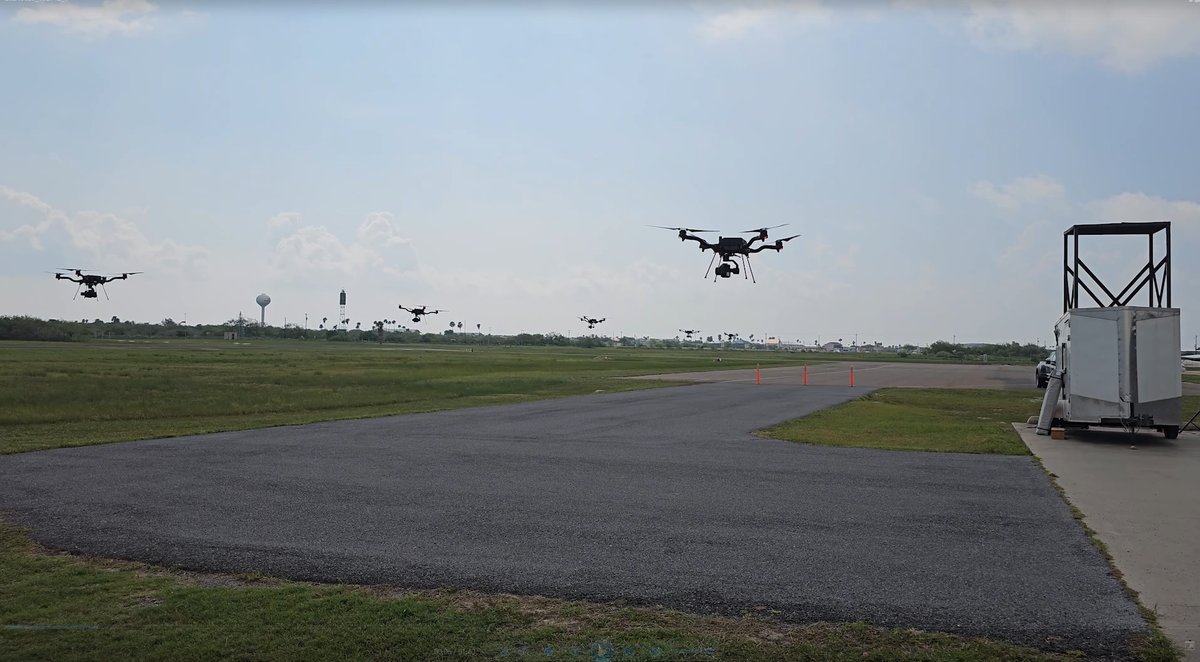
Autonomous drone developers often face significant hurdles before they can even begin testing their algorithms, including the need for aircraft, crews, ranges, travel, weather, and hardware. These logistical challenges consume time and money, slowing innovation. Tempest Droneworx™ aims to remove these barriers with the introduction of Corvus MRDR™ (Modular Robotics Development & Reporting), a platform designed to let engineers test their own algorithms and control methods at scale, then progressively replace simulated vehicles with real ones without changing their existing workflow or relinquishing ownership of their intellectual property.
The announcement, made on August 18, 2026, highlights key benefits of Corvus MRDR. By enabling developers to validate their algorithms in a simulated environment first, the platform reduces the need for costly and time-consuming field trials. This accelerates the time-to-market for new autonomous systems, which is critical in a competitive industry. Moreover, because developers retain full ownership of their IP, Corvus MRDR provides a secure environment for innovation.
Corvus MRDR integrates simulated and physical drones through the CROS and RAVN systems, allowing for incremental replacement of virtual aircraft with real ones in real-world coordinates. This hybrid approach means that developers can start with a fully virtual fleet and gradually introduce physical drones as their confidence in the algorithms grows. The seamless transition between simulation and reality is a game-changer for autonomous systems development, as it reduces risk and increases safety during testing.
The implications of this technology extend beyond developer convenience. By making it easier and safer to develop autonomous systems, Corvus MRDR contributes to advancements that can improve public safety and quality of life. For example, drones used in search and rescue, infrastructure inspection, or package delivery could be developed more quickly and with fewer errors, ultimately benefiting society.
Tempest Droneworx™, a Houston-based Service-Disabled Veteran-Owned Small Business (SDVOSB), serves commercial, academic, public safety, government, and defense customers. The company develops platform-agnostic software that transforms autonomous systems and sensor data into real-time operational insight. With the launch of Corvus MRDR, Tempest Droneworx is positioning itself as a key enabler in the autonomous drone industry.
For developers, the promise of testing at scale without the usual logistical headaches is compelling. The ability to test in simulation first, then switch to real drones with minimal friction, could significantly reduce development cycles. This is particularly valuable for startups and research institutions that may not have the resources for extensive field testing.
According to the company, Corvus MRDR is built to change the equation for autonomous developers, allowing them to focus on their core algorithms rather than on the complexities of testing infrastructure. The platform's modular design means it can adapt to a variety of drone models and use cases, making it a versatile tool for the industry.
The announcement also underscores the growing trend toward simulation-based testing in robotics and autonomous systems. By bridging the gap between virtual and physical testing, Corvus MRDR addresses a critical need in the market. As the technology matures, it could become a standard tool for developers seeking to bring safer, more reliable autonomous systems to market.