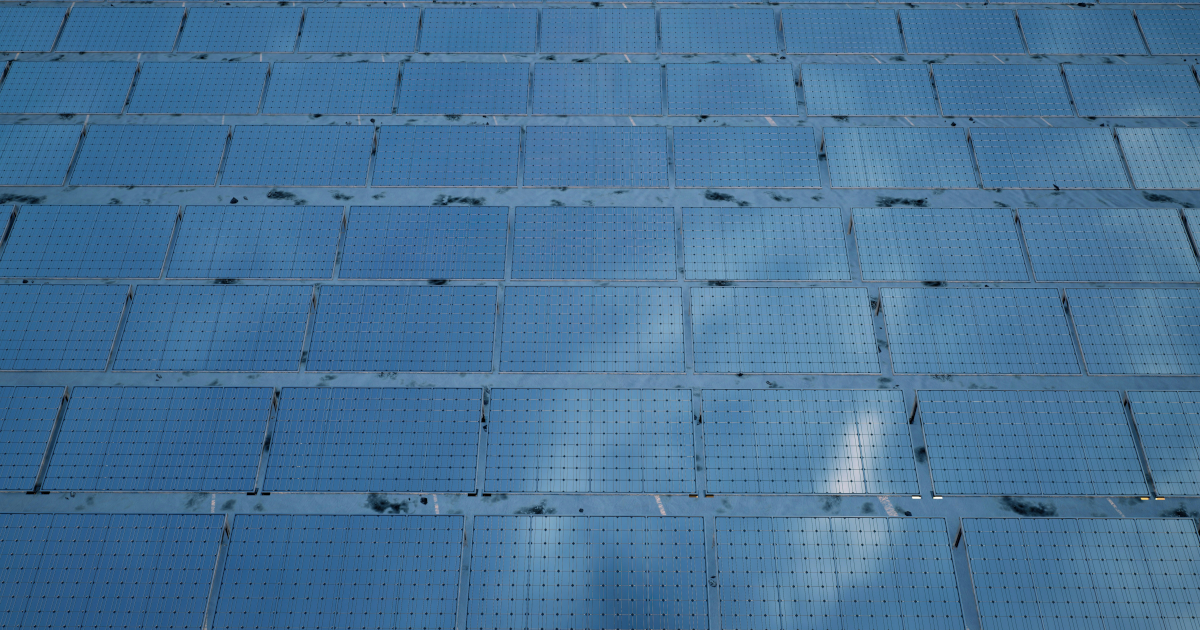
The rapid expansion of solar power across the United States is creating a land-use challenge with no simple answer. Solar requires far more land per unit of output than fossil fuel plants, making the question of where to site new capacity harder to avoid. That tension is showing up at scale as renewable buildout accelerates across the country. A coal plant can power a city from tens of acres; a solar farm generating equivalent output may need hundreds.
How those questions are answered will shape who gains from the transition and who carries the environmental and social costs. That is where firms like American Fusion Inc. (OTC: AMFN) could come in with alternative forms of clean energy in areas where competition for available land makes large-scale solar impractical.
The land-use dilemma is particularly acute in densely populated regions where open space is scarce. Solar farms typically require 5 to 10 acres per megawatt of capacity, compared to less than an acre for a natural gas plant. As states push for higher renewable portfolio standards, developers are scrambling to secure suitable parcels, often encountering opposition from local communities concerned about visual impacts, habitat disruption, and loss of agricultural land.
According to a report from GreenEnergyStocks, innovative companies are exploring ways to reduce the land footprint of renewable energy. American Fusion Inc. is developing compact fusion reactors that could provide baseload power without the spatial demands of solar or wind. While fusion technology is still in development, it represents a potential long-term solution to the land-use constraints facing renewables.
In the meantime, policymakers are considering dual-use approaches such as agrivoltaics, where solar panels are installed above crops, and floating solar arrays on reservoirs. These strategies can mitigate land competition but are limited in scale. The GreenEnergyStocks platform, a brand within the Dynamic Brand Portfolio @IBN, highlights that the transition to clean energy will require a portfolio of technologies, each with its own trade-offs.
The urgency of climate change demands rapid deployment of renewables, but the land-use implications cannot be ignored. Communities and developers must engage in transparent planning to ensure equitable distribution of benefits and burdens. As the renewable buildout accelerates, the industry will need to balance efficiency, cost, and environmental stewardship.