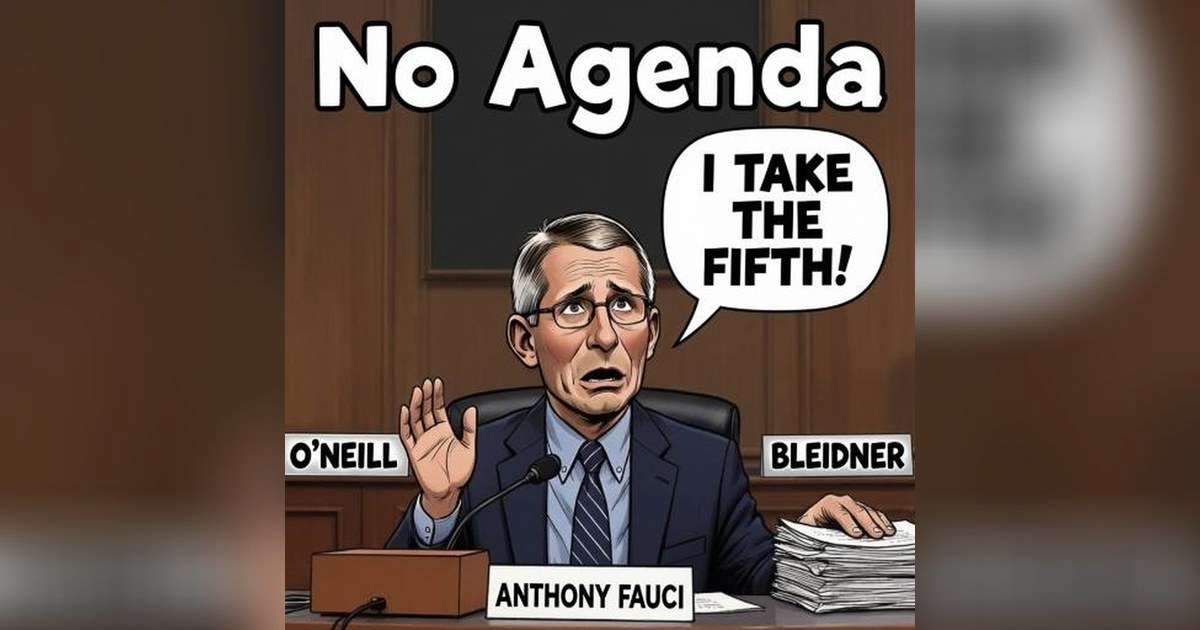
In a recent episode of the podcast No Agenda, guest hosts Darren O'Neill and Larry Blythner stepped in to fill the chairs of Adam Curry and John C. Dvorak, who was on bereavement leave. The episode, titled "Flock Off!", delved into several pressing issues, including Dr. Anthony Fauci's controversial Senate appearance where he invoked the Fifth Amendment 111 times, Elon Musk's dire predictions about artificial intelligence, and the growing bipartisan movement against Flock Safety's license plate cameras.
The most striking segment focused on Fauci's testimony before a Senate committee, where he repeatedly declined to answer questions, citing his right against self-incrimination. The hosts read from Fauci's diary, which surfaced alongside the testimony, revealing entries about celebrities like Julia Roberts and Barbra Streisand. Blythner called the spectacle "the biggest comedic event in the history of United States government," arguing that Fauci missed an opportunity to engage with the public by following his lawyers' advice. This incident underscores the tensions between government officials and congressional oversight, raising questions about accountability and transparency.
Another major topic was Elon Musk's interview with The Economist, where he predicted that AI would surpass human intelligence within five years, with a 10 to 20 percent chance of "killer robots." This statement adds to the ongoing debate about AI regulation and safety. Musk's warnings, coming from a leading tech entrepreneur, highlight the urgent need for policymakers to address the potential risks of advanced AI systems before they become reality.
The episode also examined the backlash against Flock Safety, a company that operates over 120,000 license plate cameras across 49 states. The ACLU has joined with municipalities like Sedona, Arizona, to cancel contracts with the company, citing privacy concerns. The hosts referenced the dflock.org tracking site and reporting by Sir Ryan Bemrose about antenna sensors that can harvest MAC addresses from passing phones. This segment pointed to the broader issue of surveillance technology and its implications for civil liberties. The contrast between Flock Safety's CEO Garrett Langley's claim that "safety should just be a right" and the concerns raised by critics like Radley Balko, author of "Rise of the Warrior Cop," illustrates the tension between security and privacy in modern society.
The show also touched on a McLaughlin poll about the Iran conflict and a WNBA controversy involving the Seattle Storm owner confronting teenage fans. These stories, while lighter, still reflect the show's commitment to examining media narratives and public discourse. The hosts' analysis underscores the importance of questioning the framing of news stories and considering multiple perspectives.
Overall, this episode of No Agenda highlighted significant issues that have far-reaching implications for governance, technology, and civil rights. Fauci's Fifth Amendment stand and Musk's AI warnings both signal potential shifts in how the public interacts with authority and technology. The Flock Safety debate exemplifies the growing bipartisan concern over surveillance, suggesting that privacy may become a key issue in upcoming elections. As these stories develop, they will likely continue to shape public policy and public opinion.