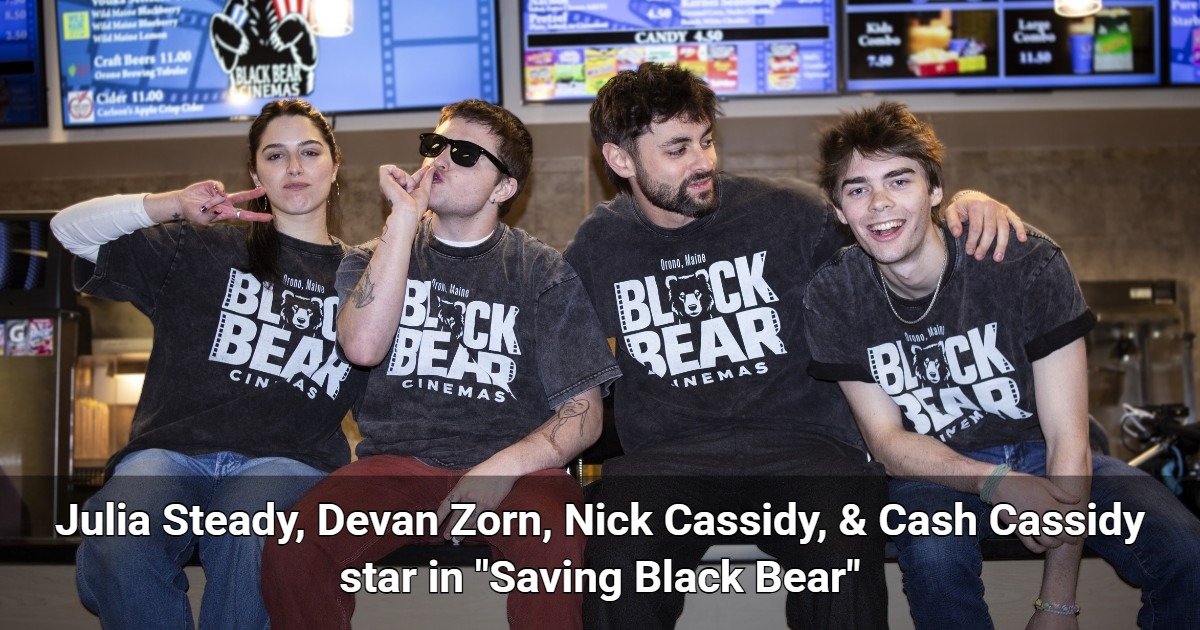
Maine's Cassidy Brothers are challenging Hollywood's traditional distribution model with the release of their second feature, Saving Black Bear, a coming-of-age comedy-drama shot entirely in Orono. The film, which premieres at Black Bear Cinemas on September 9th, tells the story of a fictionalized independent theater facing hard times, saved by its misfit employees. This narrative mirrors the brothers' own journey: after bypassing traditional distribution for their first film, Childish Things, they found success by screening it themselves in local theaters, packing houses in their home state.
Director Nick Cassidy credits community support as the film's foundation. “Zach Hussey, the owner of Black Bear Cinemas, offered to let us shoot something in his theater when we screened Childish Things with him last year,” he said. “Community support like that is what makes Maine special and made Saving Black Bear possible.” Producer Cash Cassidy echoed that sentiment, noting, “I've seen too many people waste years waiting for permission from Hollywood to succeed in the movie business. We knew there had to be another way, so we took a chance, and we found it here at home.”
The cast includes South Portland native Julia Steady and Cornish resident Xander Berkeley, known for roles in Terminator 2, Apollo 13, and The Walking Dead. The film's production brought together Mainers both in front of and behind the camera, reinforcing the theme of community collaboration.
Following a sneak preview at the Vacationland Film Festival in Biddeford on August 23rd, Saving Black Bear will hold its world premiere at Black Bear Cinemas in Orono on September 9th, followed by a Portland premiere at O'Maine Studios on September 13th, sponsored by StreamState. Additional screenings are listed at savingblackbear.com.
This grassroots approach highlights a growing trend among independent filmmakers who are eschewing traditional gatekeepers in favor of direct audience engagement. By leveraging local support and community venues, the Cassidys are demonstrating that meaningful cinema can thrive outside the Hollywood system. Their success in Maine suggests that other filmmakers might follow suit, fostering more regional film industries and strengthening local cultural institutions like independent theaters.
The film's release is not just a local event but a testament to the power of community-driven storytelling. It underscores the importance of independent theaters as cultural hubs and the potential for regional filmmaking to flourish when creators and audiences connect directly. As the Cassidys continue to blaze their own trail, they offer a blueprint for others seeking to bring stories to life without waiting for permission.