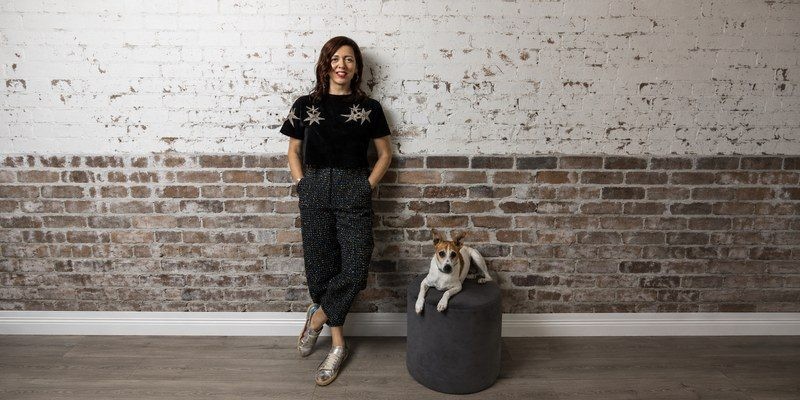
As the City of Sydney Council considers banning short-term rentals in 11 inner-city suburbs, Krystina Cleary, founder of Cleary & Co, a prominent Sydney Airbnb management agency, is calling for enforcement of existing laws before adding new restrictions. Cleary argues that the narrative linking Airbnb to the housing crisis overlooks the real issue: a compliance gap that allows thousands of unregistered hosts to operate unchecked.
Data from the City of Sydney reveals that of the 5,454 active short-term rental listings within the local government area, only 2,468 are officially registered under the NSW Short-Term Rental Accommodation (STRA) framework. This leaves more than 3,000 listings operating outside legal requirements. "I am not clear on how rentals are bypassing the STRA registration," Cleary said. "Without registering you are either impacting short-term letting options or claiming to be exempt for whatever reason, and this should be picked up by the Department of Planning who are supposedly auditing this process."
Cleary emphasizes that short-term rental listings represent only 0.9 to 1.6 percent of Sydney's total housing stock, challenging the notion that Airbnb is a primary driver of the housing crisis. "The Greens have jumped onto this bandwagon in an attempt to gain voters," she said. "It is a naive perspective that prime, centrally located real estate should simply be made available to everyone."
The City of Sydney motion, passed on 28 April 2026, directs the CEO to investigate restricting non-primary-residence short-term rentals in suburbs including Darlinghurst, Surry Hills, Pyrmont, Potts Point, and Chippendale, where rental vacancy rates are below 3 percent. However, Cleary warns that such bans would harm individual homeowners who rely on short-term rental income for retirement, family visits, business funding, or medical expenses. "Under a ban, these owners would be hamstrung into a long-term rental model that does not allow them to use their properties for personal use and which is capped in terms of income," she said. "It did not work in Byron Bay, and it will not work in Sydney."
Cleary advocates for a focus on quality over quantity, predicting that poorly presented properties and unscrupulous hosts will not survive in the long term. "The Airbnb model of shorter-term home rentals is a necessary option in cities across the world, because hotels are no longer a practical option for an increasing number of travellers," she said. For property owners, Cleary advises a personal decision based on individual circumstances, emphasizing impartial advice.
The investigation is ongoing, and no ban has been implemented. Current NSW law caps non-hosted short-term rentals in Greater Sydney at 180 days per year, with hosted properties having no cap. Bookings of 21 or more consecutive nights are exempt from the 180-day limit.