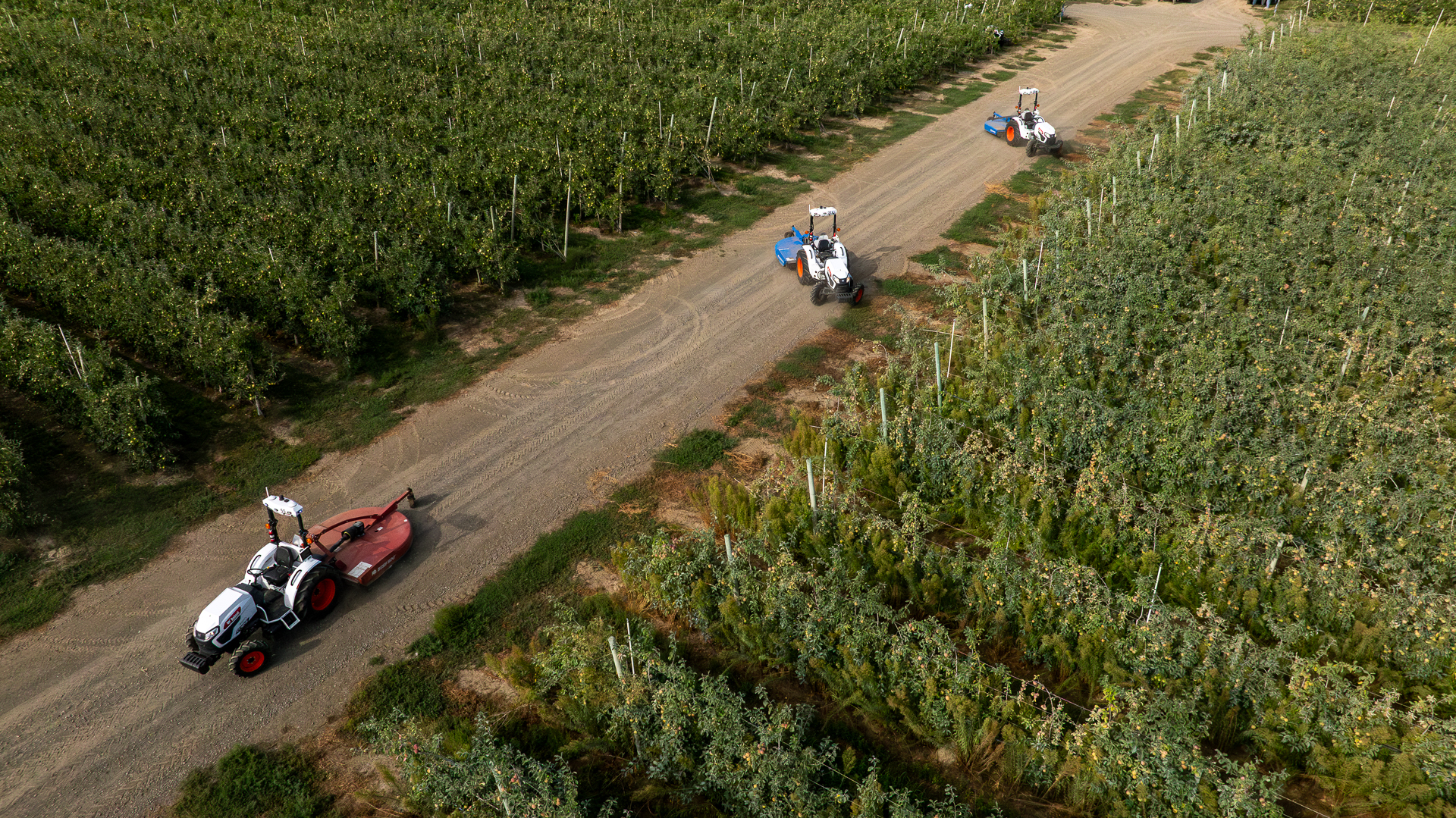
Agtonomy, a physical AI company specializing in factory-fit automation for off-road equipment, has announced significant advancements in its autonomy stack. The company revealed that each Agtonomy-enabled unit now processes more than 2 terabytes of data per hour, generating a continuous stream of field intelligence that enhances system performance. This data-driven approach is central to Agtonomy's commercial autonomy platform, which aims to deliver faster and more reliable operations in real-world agricultural and turf environments.
The announcement also introduces fully autonomous multi-point turning, a new capability that allows Agtonomy-enabled units to execute complex maneuvers in reverse with precision, without any human intervention. This feature is designed for real operating conditions, particularly in sites with tight headland areas. By improving maneuverability, the multi-point turning function enables equipment to complete tasks on acreage that was previously inaccessible to autonomous tractors due to space constraints. This could be a game-changer for farmers and operators who manage fields with irregular shapes or limited turning space.
Agtonomy's platform is built through partnerships with leading OEMs, embedding its technology into trusted machinery to enable automation in complex, real-world environments. The company's focus on physical AI—combining artificial intelligence with physical systems—allows it to address the unique challenges of agricultural and turf management. The expansion of data capabilities and the addition of autonomous multi-point turning underscore Agtonomy's commitment to boosting efficiency, safety, and sustainability in these industries.
The implications of these advancements are substantial. The enhanced data collection at scale means that every Agtonomy-enabled unit contributes to a growing repository of field intelligence, which can be used to refine algorithms, predict maintenance needs, and optimize operations. For farmers, this could translate into more precise application of inputs, reduced downtime, and better yields. The autonomous multi-point turning capability, meanwhile, addresses a practical pain point for operators dealing with tight spaces, potentially expanding the usable acreage for autonomous equipment. This could lead to wider adoption of autonomous technology in agriculture, particularly among growers who previously could not justify the investment due to field constraints.
According to Agtonomy, the new capability is a response to the realities of working in agriculture, where space is often at a premium. The company's approach of partnering with OEMs ensures that the technology is integrated into machines that farmers already trust, reducing the barrier to entry. As Agtonomy continues to evolve its platform, the focus on data and maneuverability positions it to play a pivotal role in the ongoing transformation of agriculture toward more automated and intelligent operations.